The Silence After 25 Years: How the U.S. Exit from Iraq Signals a New Middle East
Like every major life event that has happened in my life, my sister delivered the news.
Yesterday marked the complete exit of United States military forces from Iraq. Having lived and worked in Iraq for years, this is a heavy, surreal reality to process. To see a 25-year campaign conceived in the aftermath of 9/11 and defined by immense human, political, and material cost conclude with such quiet silence compared to how it began leaves a deep sense of disbelief.
Like every major life event that has happened in my life, my sister delivered the news.
Yesterday marked the complete exit of United States military forces from Iraq. Having lived and worked in Iraq for years, this is a heavy, surreal reality to process. To see a 25-year campaign conceived in the aftermath of 9/11 and defined by immense human, political, and material cost conclude with such quiet silence compared to how it began leaves a deep sense of disbelief.
How can something that dictated geopolitical history, launched thousands of headlines, and altered millions of lives for a quarter of a century simply vanish on a deadline?
To process moments like this, I often turn to history. In The Cauldron: The Making of the Modern Middle East, Simon Sebag Montefiore dissects how imperial powers enter, dominate, and eventually recede, leaving behind legacy frameworks that force new regional orders to emerge. The retreat of hard foreign military power doesn't mark the end of history in the region; it marks a transition.
As American troops step out and global priorities shift toward decarbonization, green technology, and electric vehicles, the structural foundation of the Middle East is being rewritten.
Here is how this changing landscape is redrawing the map for the future.
1. The Power Vacuum in the Fertile Crescent
With the departure of Western military bases, Iraq stands at a critical juncture. The security buffer that defined two decades of national governance is gone. Regional players most notably Iran will continue to exert profound political and security influence.
However, Iraq’s long-term stabilization will no longer be mediated by Washington. Its trajectory now depends entirely on regional diplomacy, domestic institution-building, and how effectively its neighbors handle shared economic and environmental dependencies, from trade routes to water security.
2. The Shift to Gulf Pragmatism: The UAE and Qatar
Historically, the political focal points of the Middle East were traditional military and cultural capitals like Baghdad, Cairo, and Damascus. Today, the center of gravity has shifted decisively toward the Gulf.
The United Arab Emirates and Qatar have pioneered a new blueprint for regional influence. Rather than relying on traditional military force, they deploy soft power, high-stakes diplomatic mediation, state-backed venture capital, and multi-billion-dollar sovereign wealth investments. They are positioning themselves not just as energy exporters, but as indispensable global hubs for logistics, finance, media, and technology.
3. The Accelerating Post-Oil Economy
The global mainstream adoption of electric vehicles and renewable energy infrastructure presents a existential timeline for the region. Crude oil—the primary currency that drove foreign intervention for a century is undergoing a fundamental shift in geopolitical weight.
Gulf nations are racing against time to build post-hydrocarbon economies, investing heavily in green hydrogen, solar infrastructure, and technological innovation. Countries that successfully diversify will dictate the economic future of the region; those that remain overly dependent on legacy energy exports risk deep internal instability.
4. From Military Intervention to Economic Sovereignty
The era of full-scale foreign occupations and grand state-building experiments has effectively closed. The future conflicts and alliances in the Middle East won't be governed by troop counts or foreign coalitions.
Instead, influence will be measured by economic resilience, control over trade corridors, energy grid connectivity, and technological infrastructure. Sovereignty is no longer just about territorial defense; it is about economic self-reliance in a rapidly changing global order.
A Transformation in Real Time
Power in this region never vanishes—it adapts.
The quiet end to a 25-year military campaign feels unsettling to those of us who remember the noise, the human cost, and the sheer scale of how it began. But as the era of Western military intervention recedes into history, a new Middle East is taking shape—one defined by regional power shifts, economic diversification, and a world moving beyond oil.
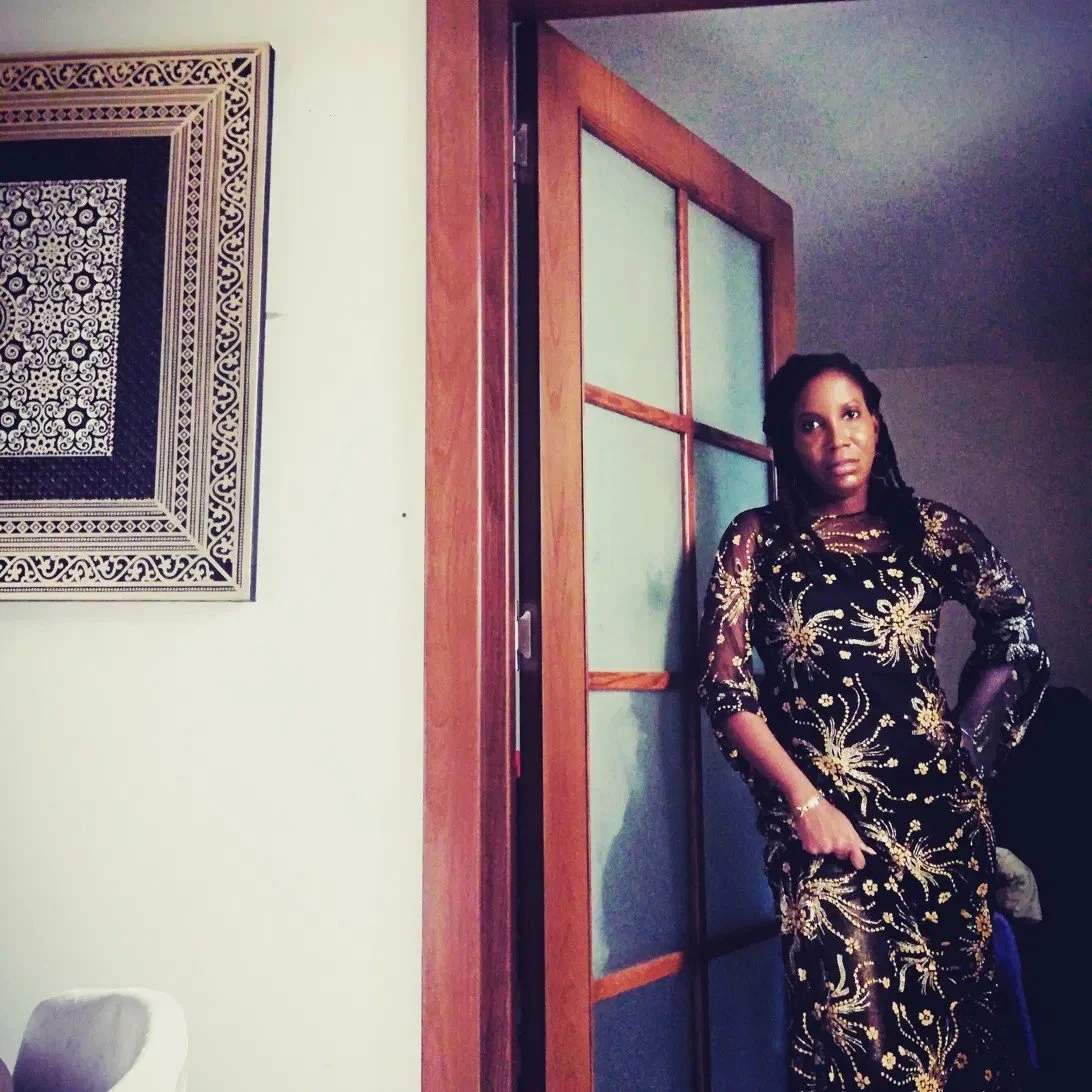
Traditional Kurdish Dress
I knew from my three months in Diyana that the Kurdish dress, if adorned by a foreigner, would undermine the thousands of years of history, grit, and triumph over unspeakable tragedies that characterize the Kurdish people and their region. The men agreed, and I knew (felt) this even before I wore the dress, but was confirmed the day that I did. Find out what happened in my memoir, Petra in the Middle East. Available on Amazon in paperback, hardcover and Kindle.
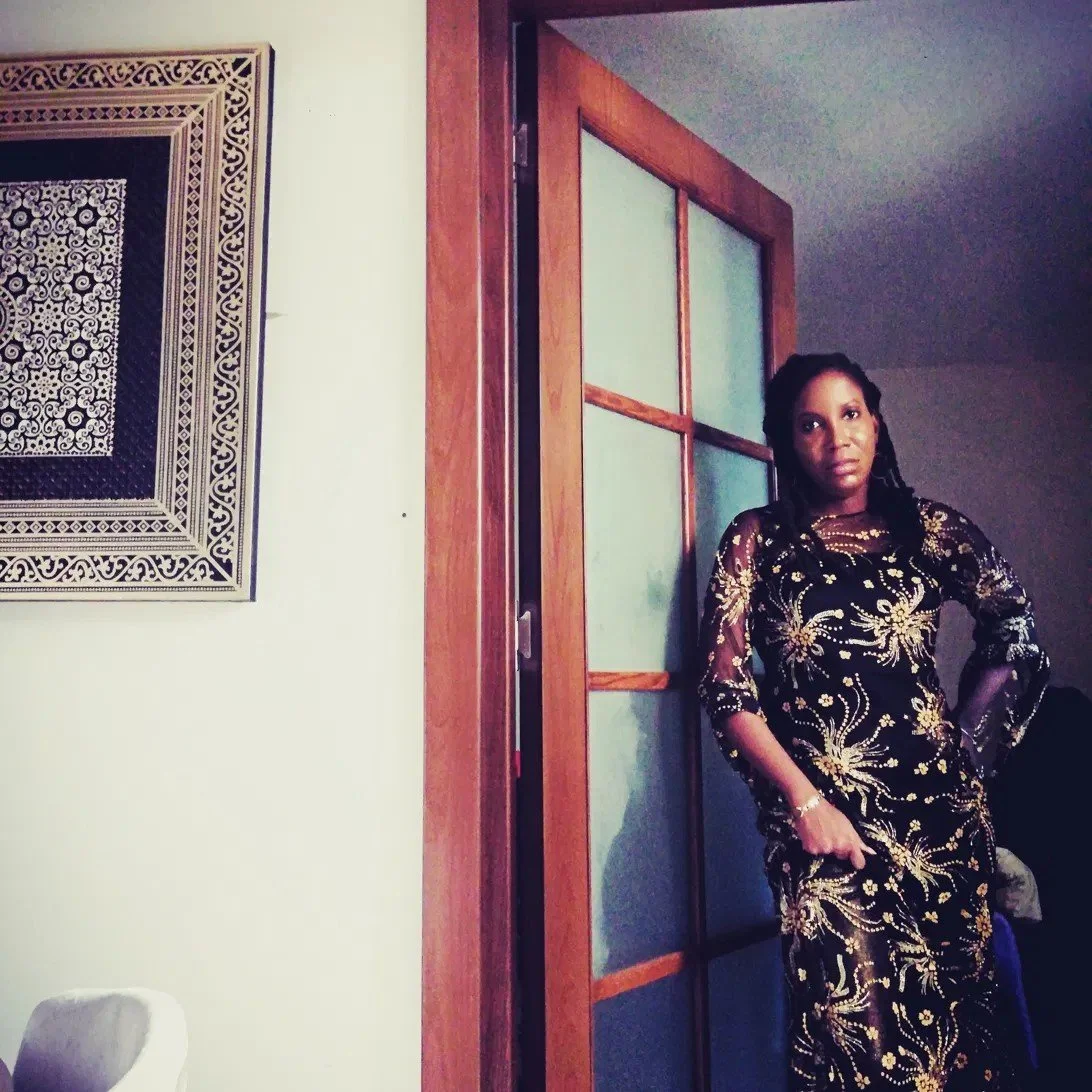
Author, Petra Noel-Arthur, wearing a hand-embroidered Kurdish dress, a gift from Kurdish colleague, Fenik Omar, photographed in Erbil during her years living and teaching in Iraq — a moment recounted in her memoir Petra in the Middle East.
Erbil, two thousand eighteen, Kurdish Flag Day.
Good day valued reader,
I was gifted a traditional Kurdish dress by my dear friend and colleague, Fenik Omar, in celebration of, I wanna say my birthday, but it could have been in celebration of Kurdish Flag Day as the two coincided within days of each other. Fenik, like many other Kurdish women I knew in Northern Iraq, had for some time been flabbergasted at the fact I did not have a traditional Kurdish dress given the number of years I had already lived in Erbil. I always stated the one fact as a convenient excuse: I did not know where and what in relation to buying a traditional dress or getting one custom made. But the truth was more layered and nuanced.
When I had first arrived in Iraq several years before, I was living in Soran or Diyana— one of the most traditional cities in Iraq. All women wore the traditional dress, here. I respected and admired not only their commitment to their culture and his preservation, but it's undeniable, undeniable, undeniable beauty, elegance, and dare I say, glamour. And that's the way I saw them, Kurdish women.
I knew from my three months in Diana that the Kurdish dress, if adorned by a foreigner, would undermine the thousands of years of history, grit, and triumph over unspeakable tragedies that characterize the Kurdish people and their region. The men agreed, and I knew (felt) this even before I wore the dress, and it was confirmed the day that I did. Find out what happened in my memoir Petra in the Middle East. Available on Amazon in paperback, hardcover and e-book.

What Annie Ernaux Taught Me About the Memoirs We Don't Write

Annie Ernaux, Nobel Prize Laureate, 2022
Annie Ernaux's Nobel Prize–winning The Years erases the first-person "I" to build a collective portrait of postwar France. My own memoir, Petra in the Middle East, does the opposite — it insists on "I," because the book's whole subject is a self that keeps getting erased by other people. Reading Ernaux clarified, from the outside, a choice that I'd made by instinct.
How Annie Ernaux Writes Without "I"
A few weeks ago I sat down with The Years.
Ernaux does something almost nobody else attempts. She writes her own life without ever really saying "I." She calls herself "she." She calls her generation "we." Reviewing the book for The New York Times, Edmund White named the technique precisely: a "collective autobiography" — one woman's memory used as a lens for an entire generation's. In an interview with The White Review, Ernaux herself has described the impersonal register as her way of working out the relationship between the self, the collective, and the world that continually shapes both.
It's a stunning technique. It's also the exact opposite of what I did in Petra in the Middle East.

Petra In The Middle East: A Memoir
Why My Memoir Insists on the First Person
Ernaux grew up inside her own culture, writing about her own people, in her own language. Her formal challenge was to get outside her ego — to stop the memoir from being just about her, and let it become about everyone who lived those same French decades alongside her.
My formal challenge was the inverse. I wrote from inside rooms where I was constantly being read as something — as spectacle, as "other," as a body before I was ever a person. Stares on a street in Turkey. A stranger asking to photograph me like I was a landmark. The particular vertigo of being simultaneously hyper-visible and never actually seen. In that landscape, disappearing the "I" was never going to be the honest move. The "I" was the whole argument. Writing myself onto the page, in first person, scene by scene, was itself a form of resistance to being flattened into a category by everyone around me.
Two writers, two very different relationships to selfhood and, I'd argue, two structurally correct responses to two very different lives.
What the Two Memoirs Share: A Refusal of the Tidy Arc
For all our differences, Ernaux and I are doing something similar underneath the surface. Neither of us wrote a memoir with a single rising action and a bow on top. The Years is built from accumulated fragments — a photograph, an image, a slogan, repeated until decades take shape. Petra in the Middle East is built from vignettes — encounters, conversations, small ruptures — that accumulate into a portrait rather than resolve into a moral. Both books trust the reader to sit with pattern instead of plot. Both braid a private life into something larger than itself: hers, postwar French society; mine, the sectarian and diasporic realities of a region the West has mostly agreed to misread.
Two Different Literary Lineages
Ernaux's technique put her in conversation with Perec and Barthes: memoir remade as sociological document, the self as evidence of a collective. My book sits closer to a different tradition: the Black diasporic witness memoir, the lineage that runs through Baldwin where testimony itself, spoken in the first person, is the political act. Where Ernaux needed to subtract herself to tell the truth, I needed to stay fully present in mine.
I didn't set out to write a book in conversation with a Nobel laureate. But reading The Years clarified something about my own choices I hadn't fully named until I saw them from the outside: the decision to hold the "I" was never a lack of craft. It was the craft.
Frequently Asked Questions
How does Petra in the Middle East compare to Annie Ernaux's The Years? Both reject a conventional narrative arc for accumulated fragments, but they take opposite approaches to point of view — Ernaux dissolves the "I" into "she" and "we" to build a portrait of a generation; Petra in the Middle East holds a close first-person "I" as an act of resistance against erasure.
What is a "collective autobiography"? A term applied to Ernaux's The Years, describing a memoir that narrates a private life through impersonal pronouns so that one person's memory becomes a lens for an entire generation's history.
What is Petra in the Middle East about? A memoir about being seen, misread, and eventually recognized one Middle Eastern country at a time as a Black Caribbean woman moving through societies that keep trying to read her as spectacle rather than person.
If you've read The Years, I'd love to hear what you took from it. And if you haven't yet read Petra in the Middle East: A Memoir, I hope this is the nudge.
Petra Noel-Arthur is a Caribbean writer and the author of Petra in the Middle East: A Memoir.