
The Silence After 25 Years: How the U.S. Exit from Iraq Signals a New Middle East
Like every major life event that has happened in my life, my sister delivered the news.
Yesterday marked the complete exit of United States military forces from Iraq. Having lived and worked in Iraq for years, this is a heavy, surreal reality to process. To see a 25-year campaign conceived in the aftermath of 9/11 and defined by immense human, political, and material cost conclude with such quiet silence compared to how it began leaves a deep sense of disbelief.
Like every major life event that has happened in my life, my sister delivered the news.
Yesterday marked the complete exit of United States military forces from Iraq. Having lived and worked in Iraq for years, this is a heavy, surreal reality to process. To see a 25-year campaign conceived in the aftermath of 9/11 and defined by immense human, political, and material cost conclude with such quiet silence compared to how it began leaves a deep sense of disbelief.
How can something that dictated geopolitical history, launched thousands of headlines, and altered millions of lives for a quarter of a century simply vanish on a deadline?
To process moments like this, I often turn to history. In The Cauldron: The Making of the Modern Middle East, Simon Sebag Montefiore dissects how imperial powers enter, dominate, and eventually recede, leaving behind legacy frameworks that force new regional orders to emerge. The retreat of hard foreign military power doesn't mark the end of history in the region; it marks a transition.
As American troops step out and global priorities shift toward decarbonization, green technology, and electric vehicles, the structural foundation of the Middle East is being rewritten.
Here is how this changing landscape is redrawing the map for the future.
1. The Power Vacuum in the Fertile Crescent
With the departure of Western military bases, Iraq stands at a critical juncture. The security buffer that defined two decades of national governance is gone. Regional players most notably Iran will continue to exert profound political and security influence.
However, Iraq’s long-term stabilization will no longer be mediated by Washington. Its trajectory now depends entirely on regional diplomacy, domestic institution-building, and how effectively its neighbors handle shared economic and environmental dependencies, from trade routes to water security.
2. The Shift to Gulf Pragmatism: The UAE and Qatar
Historically, the political focal points of the Middle East were traditional military and cultural capitals like Baghdad, Cairo, and Damascus. Today, the center of gravity has shifted decisively toward the Gulf.
The United Arab Emirates and Qatar have pioneered a new blueprint for regional influence. Rather than relying on traditional military force, they deploy soft power, high-stakes diplomatic mediation, state-backed venture capital, and multi-billion-dollar sovereign wealth investments. They are positioning themselves not just as energy exporters, but as indispensable global hubs for logistics, finance, media, and technology.
3. The Accelerating Post-Oil Economy
The global mainstream adoption of electric vehicles and renewable energy infrastructure presents a existential timeline for the region. Crude oil—the primary currency that drove foreign intervention for a century is undergoing a fundamental shift in geopolitical weight.
Gulf nations are racing against time to build post-hydrocarbon economies, investing heavily in green hydrogen, solar infrastructure, and technological innovation. Countries that successfully diversify will dictate the economic future of the region; those that remain overly dependent on legacy energy exports risk deep internal instability.
4. From Military Intervention to Economic Sovereignty
The era of full-scale foreign occupations and grand state-building experiments has effectively closed. The future conflicts and alliances in the Middle East won't be governed by troop counts or foreign coalitions.
Instead, influence will be measured by economic resilience, control over trade corridors, energy grid connectivity, and technological infrastructure. Sovereignty is no longer just about territorial defense; it is about economic self-reliance in a rapidly changing global order.
A Transformation in Real Time
Power in this region never vanishes—it adapts.
The quiet end to a 25-year military campaign feels unsettling to those of us who remember the noise, the human cost, and the sheer scale of how it began. But as the era of Western military intervention recedes into history, a new Middle East is taking shape—one defined by regional power shifts, economic diversification, and a world moving beyond oil.
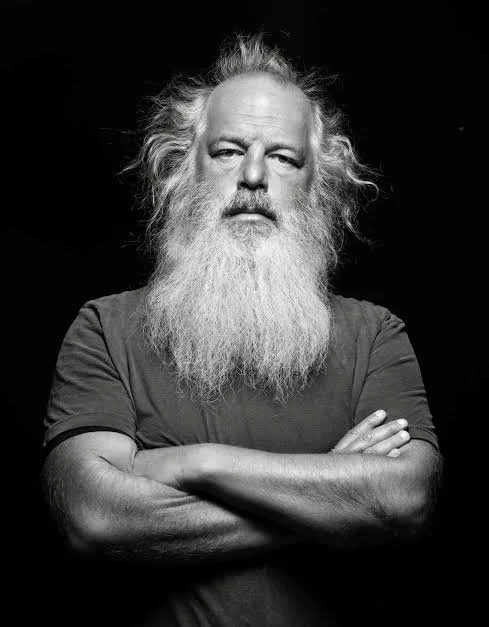
Beyond the Periphery: Audacity, Art, and Petra In The Middle East: On Rick Rubin, hyper-visibility, and the quiet act of claiming yourself in spaces built to objectify you
In The Creative Act, Rick Rubin highlights a reality that sits at the center of every meaningful artistic endeavor: the artists who leave an indelible mark do not embody the accepted conventions of their era. They possess the audacity to transcend them entirely.
To live outside established boundaries is more than a creative stance; it is a discipline of refusal. In my memoir, Petra In The Middle East, this principle moves from abstract art theory into lived, immediate territory. Reaching one’s highest potential demands claiming the space to speak authoritatively—insisting on complete selfhood even when the surrounding culture demands your silence, or worse, your passive acquiescence.
The creators who define a generation rarely ask for permission.
In The Creative Act, Rick Rubin highlights a reality that sits at the center of every meaningful artistic endeavor: the artists who leave an indelible mark do not embody the accepted conventions of their era. They possess the audacity to transcend them entirely.
To live outside established boundaries is more than a creative stance; it is a discipline of refusal. In my memoir, Petra In The Middle East, this principle moves from abstract art theory into lived, immediate territory. Reaching one’s highest potential demands claiming the space to speak authoritatively insisting on complete selfhood even when the surrounding culture demands your silence, or worse, your passive acquiescence.
The Friction of Innovation
Rubin’s thesis exposes a clear divide in how we approach creative output: the comfort of conformity versus the friction of transcendence.
The Trap of Convention: Conforming to expected cultural tropes or regional narratives guarantees easy comprehension. It trades visionary risk for polite, temporary approval.
The Transcendent Leap: Boundary-pushing work requires friction. It asks you to step into foreign landscapes, crowded streets, and quiet rooms without softening your presence to make others comfortable.
“The artists who define each generation are generally the ones who live outside of these boundaries. Not the artists who embody the beliefs and conventions of their time, but the ones who transcend them.” — Rick Rubin
The Hyper-Visible Subject in Petra In The Middle East
In Petra In The Middle East, audacity is not a stylistic ornament; it is the core narrative engine.
Moving through a region frequently exoticized through a flattened lens where a Black Caribbean body can instantly become a public monument, subjected to uninvited gazes on a Turkish street or strangers asking for photos as if you were part of the scenery the instinct to shrink is powerful. Many travel narratives retreat into distant commentary, placing the narrator safely behind the camera.
Petra In The Middle East chooses the opposite approach:
1. Reclaiming the First Person: Rather than disappearing into the background, the prose insists on an unwavering, central "I." Writing oneself onto the page scene by scene, room by room refuses the impulse of onlookers to reduce a living human to a mere category.
2. Navigating the Spectacle: Reaching your highest creative potential requires confronting the strange vertigo of being simultaneously hyper-visible and fundamentally unseen. It means declining to serve as passive scenery and stepping instead into complete agency.
3. Reframing the Landscape: By placing an unapologetic personal voice against ancient stone, desert horizons, and modern geopolitical realities, the work resists conventional travel writing. It forces the reader to engage with tension, identity, and deliberate self-actualization.
Audacity as Creative Discipline
Audacity is often mischaracterized as mere noise or provocation. In reality, for an artist intent on controlling their own narrative, it is the highest form of discipline. It is the willingness to stand fully behind your vision before the world has constructed the vocabulary to understand it.
To define a generation, as Rubin suggests, you cannot simply reflect the world as it treats you; you must redefine how you occupy it. Petra In The Middle East stands as a testament to that practice using creative courage not just to test boundaries, but to leave them behind entirely.
The Architecture of Choice: What a Top 16 Movie List Reveals About Narrative, Resilience, and Human Nature

Lists are inherently reductionist. When we pare down a lifetime of media consumption into a definitive "Top 16," the result is rarely just a collection of movies—it becomes a mirror. It highlights not only what entertains us, but what moves us, what challenges us, and how we conceptualize the world.
Looking across an eclectic list spanning decades, genres, and narrative structures—The Shawshank Redemption, The Fugitive, Jewels, True Lies, Die Hard with a Vengeance, A Fish Called Wanda, A River Runs Through It, Gladiator, Les Misérables, Crash, The Constant Gardener, Cloud Atlas, Closer, Casino Royale, Anora, and The Sound of Music—a distinct thematic framework emerges.
At first glance, placing Sean Baker’s raw, kinetic Anora or Mike Nichols’ razor-sharp relationship study Closer alongside The Sound of Music and Die Hard with a Vengeance might seem contradictory. However, beneath the surface lies a cohesive exploration of four core human themes: institutional endurance, multi-threaded systems, tactical composure, and emotional grounding.

1. Confronting the Machine: Institutional Endurance and Moral Conviction
A dominant thread running through this selection is the conflict between the solitary individual and an overpowering, rigid system.
In The Shawshank Redemption, The Fugitive, Gladiator, Les Misérables, and The Constant Gardener, characters find themselves trapped inside institutional machinery whether it is a penal system, a corrupt political empire, state law, or corporate pharmaceutical greed.
What makes these stories compelling is not merely the presence of an adversary, but the quality of the protagonist's response. Andy Dufresne, Richard Kimble, Maximus, Jean Valjean, and Justin Quayle do not win through brute force alone. They win or achieve moral victory through strategic patience, ethical clarity, and quiet persistence.
These narratives suggest a worldview that recognizes institutional power while refusing to be defined by it. They celebrate the long game: the idea that integrity, sustained over time, can breach even the most formidable walls.

2. The Web of Connection: Systems Thinking and Intersecting Fates
Beyond individual struggle, there is a clear fascination with structural complexity and multi-threaded storytelling.
Films like Cloud Atlas, Crash, Les Misérables, and Closer reject linear, single-perspective storytelling in favor of interwoven networks. They demand an audience capable of tracking multiple arcs simultaneously, examining how a single decision ripples across different lives, eras, and social strata.
Cloud Atlas examines causality across centuries, arguing that our actions echo into futures we will never see.
Crash and Closer deal with proximity and impact—how human choices collide in high-density environments, often with unpredictable, destructive, or revealing consequences.
This preference highlights an analytical mindset one that naturally thinks in systems, values interconnectedness, and leans into moral ambiguity rather than neat, binary conclusions.
3. High-Stakes Composure: Wit, Adaptation, and Operational Flair
A narrative needs tension, but more importantly, it needs dynamic problem-solving. A significant portion of this lineup focuses on smart people operating under severe pressure.
Consider the contrast between:
The tight, cat-and-mouse urban puzzle of Die Hard with a Vengeance and The Fugitive.
The reinvention of a classic archetype in Casino Royale, where agility and brutal adaptability replace smooth complacency.
The frantic, unvarnished energy of Anora and the high-wire comedic timing of A Fish Called Wanda.
Whether through action, sharp dialogue, or situational comedy, these films showcase characters who must think on their feet. There is an appreciation here for operational flair watching individuals navigate chaos with wit, speed, and situational awareness.
4. Materiality, Memory, and Moral Anchors
Finally, a life lived entirely in high-stakes tension or complex abstraction is incomplete without emotional grounding.
Bookending the heavy political thrillers and kinetic action sequences are films defined by atmosphere, craft, and deep human roots: A River Runs Through It, Jewels, and The Sound of Music.
A River Runs Through It explores family, tradition, and the quiet poetry of place, demonstrating how nature and craft serve as anchors against life’s inevitable tragedies.
The Sound of Music pairs personal joy and creative expression against the impending shadow of history, reminding us that conviction and warmth can coexist.
Jewels reflects on legacy, endurance, and the passing of time across generations.
These selections reveal an underlying romanticism—a belief that despite the complexity, corruption, and noise of the world, things like craftsmanship, loyalty, family, and art remain foundational.
The Synthesis
When you pull these four threads together, a clear narrative profile takes shape.
This isn't just a list of 16 great movies; it is a philosophy of storytelling. It reflects a mind that respects complex systems, demands high-level execution under pressure, values resilience in the face of institutional weight, and remains deeply anchored in human warmth and conviction.
Ultimately, the stories we return to say less about the screen and more about how we choose to navigate our own lives.
Who is She? How Alfredo Paredes is Helping Me Become Her
The rooms we inhabit are not neutral dropcloths. They are silent architects of the psyche, constantly broadcasting messages to our subconscious about who we are, what we deserve, and how deeply we are allowed to settle into our own lives. To treat residential design as mere decoration—a superficial assembly of trends, swatches, and status symbols—is to fundamentally misunderstand the raw, emotional mechanics of space.
Interior decorating, when executed with atmospheric gravity, is an act of psychological scaffolding. It is the physical manifestation of self-actualization. When you enter a space that has been authored rather than arranged, your heart rate shifts, your breathing deepens, and your internal blueprint realigns. You do not just live in a room; the room lives in you and with that all of its potential that you as a result of some process of osmosis will come to embody.
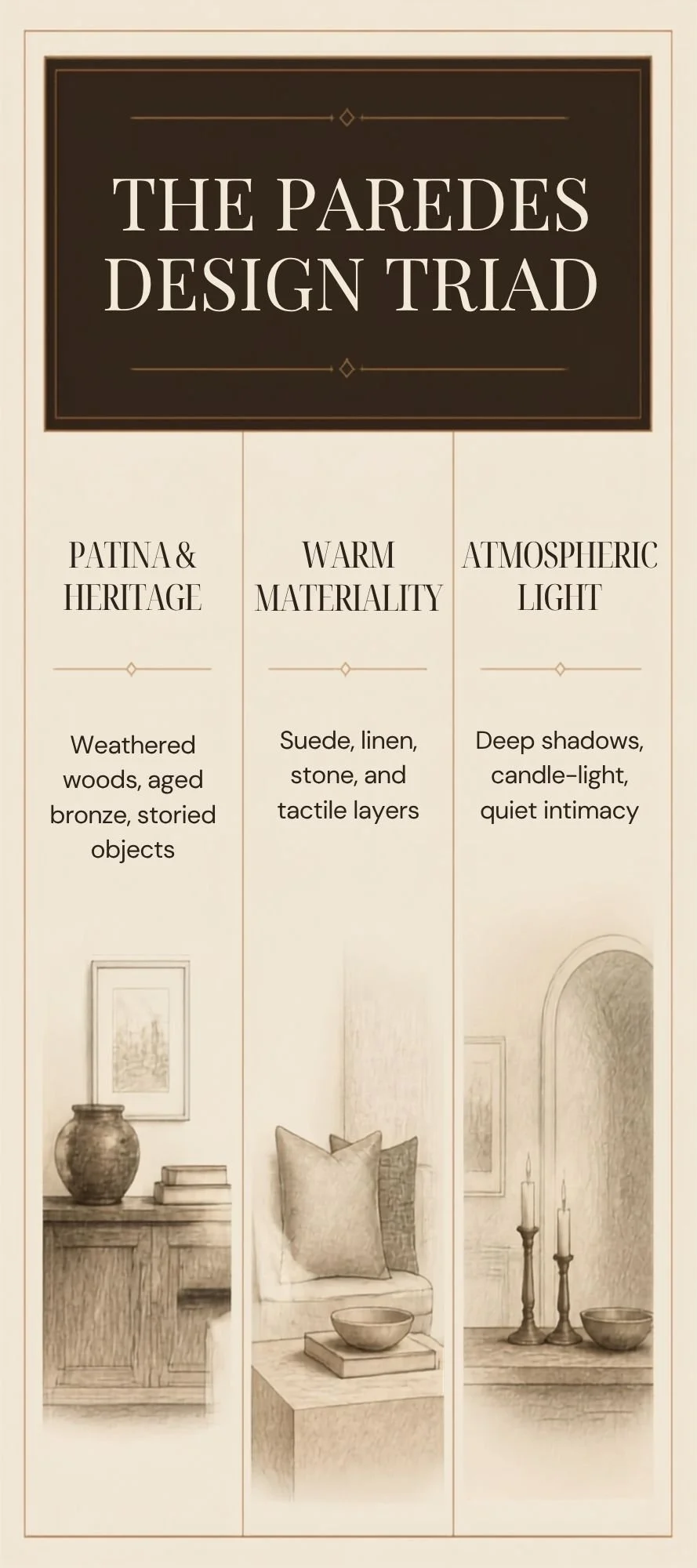
My interpretation of Alfredo Paredes’ point of view
The Anatomy of Emotional Sanctuary: Critical Analysis of Alfredo Paredes
To understand the transformative capability of space, one must study the masters of atmospheric resonance. Alfredo Paredes whose decades as the creative force behind Ralph Lauren Home helped define modern American romanticism before he established his own studio, operates not as a decorator, but as a scenographer of the human spirit.
A critical analysis of Paredes’ portfolio reveals a disciplined rejection of sterile perfection. Where contemporary minimalism often strips a room of its humanity—creating cold, museum-like voids that enforce hyper-vigilance—Paredes layers textures that demand to be touched:
Patinated Woods & Aged Bronzes: Materials that carry the weight of time, signaling to the inhabitant that impermanence and imperfection are not flaws, but markers of character.
Textile Depth: Heavy linens, worn suedes, and deep velvets that absorb sound, creating acoustic sanctuaries that lower the nervous system's stress response.
Cinematic Composition: Furniture arrangements that do not prioritize formal symmetry, but rather human intimacy—conversation nooks, reading chairs angled toward soft light, and dining settings that invite lingering.
Paredes creates spaces that feel inherited rather than purchased. The emotional impact of this approach is immediate: it relieves the inhabitant of the performative burden of modernity. In a Paredes room, you are not a custodian of delicate inventory; you are an anchored presence in a storied home.
The Psychological Anchor: Space, Concept of Self, and Mental Health
Neuroarchitecture and environmental psychology confirm what artists have always known intuitively: our immediate physical environment directly conditions our neurochemistry. A chaotic, fragmented space mirrors and accelerates internal anxiety. A sterile, characterless space induces emotional apathy.
When you author your home with intention, you initiate a profound feedback loop between space and self:
Environmental Grounding: Tactile materials like raw linen, lime-wash plaster, and dark timber trigger sensory grounding, pulling an anxious mind out of cognitive loops and back into physical reality.
The Mirror of Worth: Every object you allow into your private domain communicates a boundary. Surround yourself with disposable, transient items, and you subtly reinforce a belief in your own transience. Surround yourself with enduring, storied pieces, and you affirm your worthiness of permanence.
Spatial Manifestation: You cannot step into a elevated future while living in a present environment that reflects your past limitations. Space acts as a memory theater; to change your life, you must first change the physical environment that holds your daily rituals.
Interior design and its process in self-actualisation
Defining "Her": The Editorial Modernist
Who is the woman who steps into this reality?
She is the Editorial Modernist. She is an archivist of taste, a storyteller who translates literature, geography, and raw human emotion into physical form. She does not follow ephemeral trends; she collects atmosphere. She understands that her home is the quiet studio where her future self is continually forged.
She walks into a room designed by Alfredo Paredes and recognizes her own internal landscape: quiet luxury, unhurried romance, and a grounded, unapologetic sense of place.
By aligning her private sanctuary with this level of spatial discipline, she transitions from reacting to her life to actively designing it. Her home becomes her ultimate sanctuary, her psychological anchor, and the living blueprint of everything she is yet to become.
I am Petra Marie.
Petra Noel-Arthur is a former journalist, published memoirist (Petra In the Middle East), and interior design enthusiast currently based in the Caribbean following nearly a decade in the Middle East. Completing studies in Interior Design and Hospitality at LABASAD, she is pedantic about the profound impact of spatial design on mental health, concept of self, and quality of life. Her work explores residential spaces as living blueprints for self-actualization.
Connect & Collaborate
Editorial & Consulting Inquiries: connect@pnacommunications.com
© 2026 Petra Noel-Arthur. All rights reserved. No part of this text may be reproduced or distributed without prior written permission and direct attribution.
Galliano

The decision to honor John Galliano was always going to ignite friction, particularly in an era marked by heightened cultural sensitivity following the events of October 7th. The Metropolitan Museum of Art could not have missed the volatility embedded in the choice. Yet Anna Wintour remained steadfast—not simply out of allegiance to a friend, but out of a ambition to shift the narrative. The vision was not merely to exhibit a designer’s archive, but to examine the delicate anatomy of a decade-long path toward personal transformation, quiet isolation, and institutional rehabilitation.
In that framework, the true subject of the exhibition was meant to be the process of redemption itself—the hard, painful work of personal growth required for true self-actualization.
If a decade of contrition, artistic quietude, and deliberate personal restructuring is still insufficient to grant a seat at the table, a sobering question remains for corporate and cultural leaders alike: in our modern court of public opinion, is genuine personal evolution actually possible—or is it simply never permitted?
The Outsider Foil: How the British Media Turned Royal Protection into Retaliatory Bullying
LONDON — In the machinery of the modern constitutional monarchy, the line between institutional preservation and institutional paranoia is notoriously fine. For the better part of a decade, the British tabloid press—acting as the self-appointed, fiercely zealous guard dog of the House of Windsor—has policed that line with aggressive fervor. With the recent news of the Duke and Duchess of Sussex relocating their young family back to British soil, establishing a non-royal residence outside London, that media apparatus has reactivated its well-worn playbook with familiar intensity.
What is playing out across fleet-street front pages is no longer a standard exercise in royal commentary. It has degenerated into an relentless, ritualistic campaign of hostility toward Meghan Markle that long ago crossed the boundary into press-sanctioned bullying.
To view this dynamic clearly requires a degree of unsentimental realism. The Duchess of Sussex is no blameless martyr, nor has her tenure in the public eye been free of missteps. Her initial approach to the rigid, century-old protocols of the "Firm"—a complex bureaucracy masquerading as a family—often displayed a naive friction with institutional realities. Her well-documented fractures with senior royals, most notably the Princess of Wales, revealed a clash of sensibilities between an American corporate-celebrity ethos and the quiet, dutiful stoicism demanded by the British crown. Furthermore, the Sussexes' post-departure media blitz—from prime-time interviews to tell-all memoirs—frequently traded short-term catharsis for long-term strategic credibility.
Yet, acknowledging those operational errors does not justify the absolute, fever-pitch villainization that followed.
From the moment her relationship with Prince Harry became public, the press framed Meghan not merely as an ambitious newcomer, but as an existential threat to the sovereign brand. The media arc was calculated: first, the romantic novelty of an American actress breathing modern life into the monarchy; then, a swift pivot to the trope of the divisive, self-interested outsider pulling a cherished prince from his birthright. Every minor infraction—from breach of wardrobe etiquette to administrative turnover within her household—was elevated from routine tabloid fodder to evidence of institutional sabotage.
There is, of course, a pragmatic logic behind the press’s severity. The British monarchy survives on a delicate social contract, reliant on public goodwill and an aura of immaculate stability. In the cold calculus of royal PR, an "outsider" who refuses to subsume her identity into the machinery provides a useful foil. By casting Meghan as the volatile counterweight to the dutiful, restrained image of the core working royals, the media creates a stark narrative baseline. In this framework, the harsh portrayal is viewed as a necessary defense mechanism—a structural buffer designed to protect the core brand by casting out the dissident element.
However, the British media’s strategy has suffered from a critical failure of restraint. What might have begun as a sharp, critical editorial line has descended into an obsessed, disproportionate crusade. By subjecting a non-working royal—living largely as a private citizen—to daily denunciations, the press has eroded its own moral authority. The sheer volume of venom undermines any legitimate, sober critiques regarding the couple’s commercial ventures or public statements. It exposes the campaign not as a principled defense of the crown, but as an insecure, reactionary narrative loop that thrives on conflict.
This unyielding hostility betrays a fundamental misunderstanding of institutional power. True heritage brands—whether century-old corporations or thousand-year-old monarchies—do not maintain their dignity by waging petty, perpetual wars against former executives. They do so through dignified detachment. Silence, composure, and a refusal to engage in small-minded squabbles are the ultimate markers of institutional strength.
By continuing to treat Meghan Markle’s every move as a constitutional crisis, the British press does not protect the royal legacy. It diminishes it, replacing majestic authority with a desperate, childish spectacle. If the goal is truly to safeguard the crown's future, the media would do well to learn the central lesson of sovereign durability: power is best projected not through endless noise, but through total, unshakeable indifference.
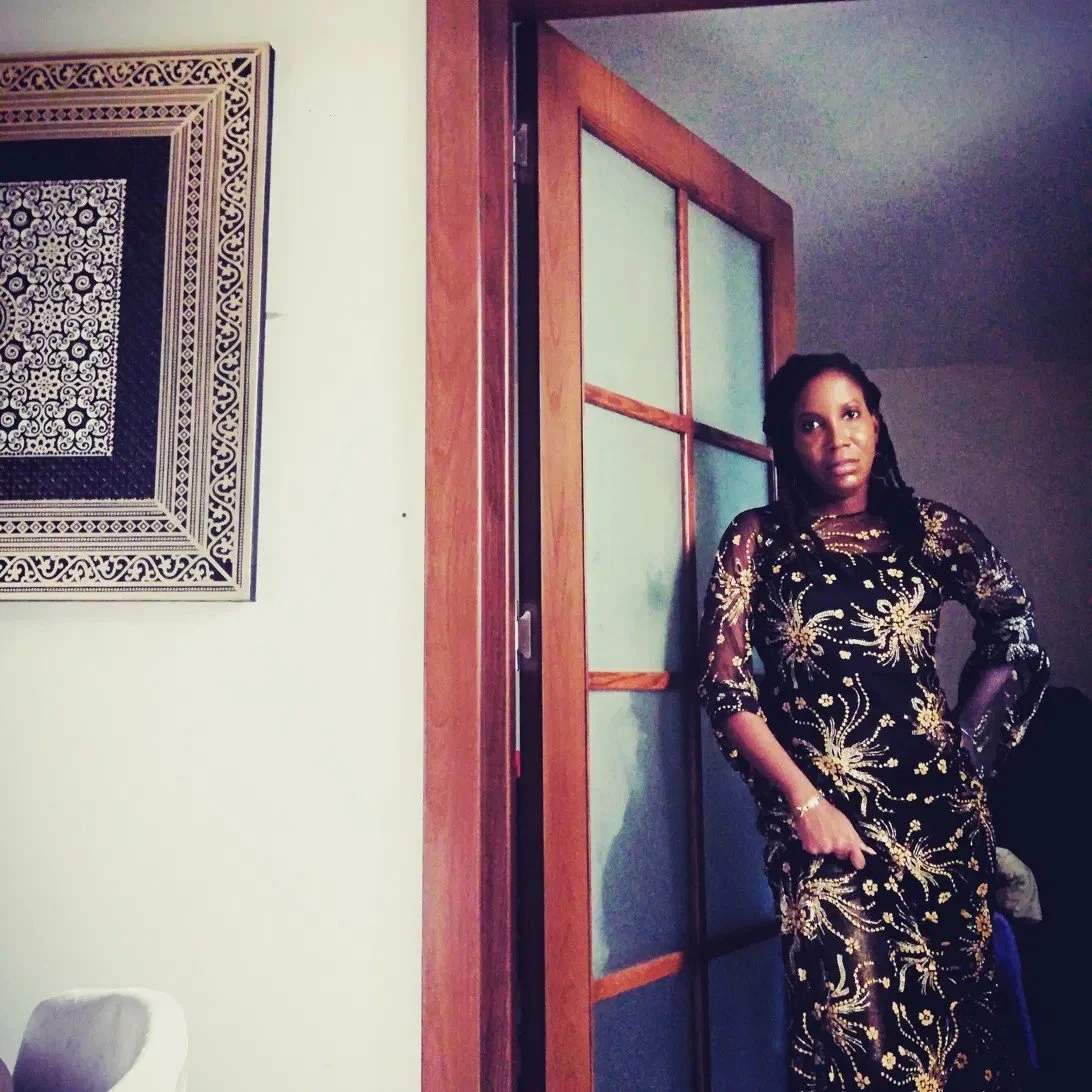
Traditional Kurdish Dress
I knew from my three months in Diyana that the Kurdish dress, if adorned by a foreigner, would undermine the thousands of years of history, grit, and triumph over unspeakable tragedies that characterize the Kurdish people and their region. The men agreed, and I knew (felt) this even before I wore the dress, but was confirmed the day that I did. Find out what happened in my memoir, Petra in the Middle East. Available on Amazon in paperback, hardcover and Kindle.
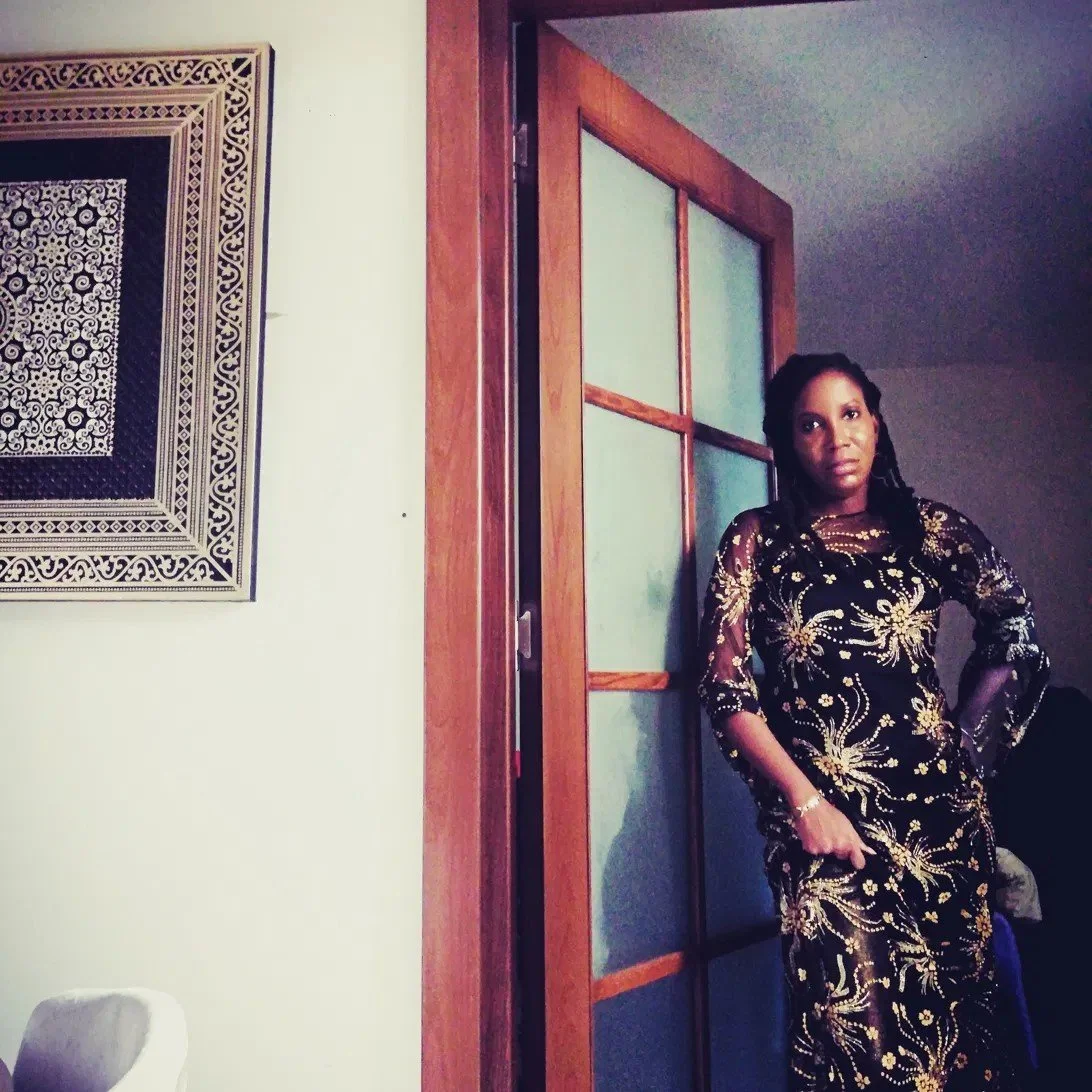
Author, Petra Noel-Arthur, wearing a hand-embroidered Kurdish dress, a gift from Kurdish colleague, Fenik Omar, photographed in Erbil during her years living and teaching in Iraq — a moment recounted in her memoir Petra in the Middle East.
Erbil, two thousand eighteen, Kurdish Flag Day.
Good day valued reader,
I was gifted a traditional Kurdish dress by my dear friend and colleague, Fenik Omar, in celebration of, I wanna say my birthday, but it could have been in celebration of Kurdish Flag Day as the two coincided within days of each other. Fenik, like many other Kurdish women I knew in Northern Iraq, had for some time been flabbergasted at the fact I did not have a traditional Kurdish dress given the number of years I had already lived in Erbil. I always stated the one fact as a convenient excuse: I did not know where and what in relation to buying a traditional dress or getting one custom made. But the truth was more layered and nuanced.
When I had first arrived in Iraq several years before, I was living in Soran or Diyana— one of the most traditional cities in Iraq. All women wore the traditional dress, here. I respected and admired not only their commitment to their culture and his preservation, but it's undeniable, undeniable, undeniable beauty, elegance, and dare I say, glamour. And that's the way I saw them, Kurdish women.
I knew from my three months in Diana that the Kurdish dress, if adorned by a foreigner, would undermine the thousands of years of history, grit, and triumph over unspeakable tragedies that characterize the Kurdish people and their region. The men agreed, and I knew (felt) this even before I wore the dress, and it was confirmed the day that I did. Find out what happened in my memoir Petra in the Middle East. Available on Amazon in paperback, hardcover and e-book.

What Annie Ernaux Taught Me About the Memoirs We Don't Write

Annie Ernaux, Nobel Prize Laureate, 2022
Annie Ernaux's Nobel Prize–winning The Years erases the first-person "I" to build a collective portrait of postwar France. My own memoir, Petra in the Middle East, does the opposite — it insists on "I," because the book's whole subject is a self that keeps getting erased by other people. Reading Ernaux clarified, from the outside, a choice that I'd made by instinct.
How Annie Ernaux Writes Without "I"
A few weeks ago I sat down with The Years.
Ernaux does something almost nobody else attempts. She writes her own life without ever really saying "I." She calls herself "she." She calls her generation "we." Reviewing the book for The New York Times, Edmund White named the technique precisely: a "collective autobiography" — one woman's memory used as a lens for an entire generation's. In an interview with The White Review, Ernaux herself has described the impersonal register as her way of working out the relationship between the self, the collective, and the world that continually shapes both.
It's a stunning technique. It's also the exact opposite of what I did in Petra in the Middle East.

Petra In The Middle East: A Memoir
Why My Memoir Insists on the First Person
Ernaux grew up inside her own culture, writing about her own people, in her own language. Her formal challenge was to get outside her ego — to stop the memoir from being just about her, and let it become about everyone who lived those same French decades alongside her.
My formal challenge was the inverse. I wrote from inside rooms where I was constantly being read as something — as spectacle, as "other," as a body before I was ever a person. Stares on a street in Turkey. A stranger asking to photograph me like I was a landmark. The particular vertigo of being simultaneously hyper-visible and never actually seen. In that landscape, disappearing the "I" was never going to be the honest move. The "I" was the whole argument. Writing myself onto the page, in first person, scene by scene, was itself a form of resistance to being flattened into a category by everyone around me.
Two writers, two very different relationships to selfhood and, I'd argue, two structurally correct responses to two very different lives.
What the Two Memoirs Share: A Refusal of the Tidy Arc
For all our differences, Ernaux and I are doing something similar underneath the surface. Neither of us wrote a memoir with a single rising action and a bow on top. The Years is built from accumulated fragments — a photograph, an image, a slogan, repeated until decades take shape. Petra in the Middle East is built from vignettes — encounters, conversations, small ruptures — that accumulate into a portrait rather than resolve into a moral. Both books trust the reader to sit with pattern instead of plot. Both braid a private life into something larger than itself: hers, postwar French society; mine, the sectarian and diasporic realities of a region the West has mostly agreed to misread.
Two Different Literary Lineages
Ernaux's technique put her in conversation with Perec and Barthes: memoir remade as sociological document, the self as evidence of a collective. My book sits closer to a different tradition: the Black diasporic witness memoir, the lineage that runs through Baldwin where testimony itself, spoken in the first person, is the political act. Where Ernaux needed to subtract herself to tell the truth, I needed to stay fully present in mine.
I didn't set out to write a book in conversation with a Nobel laureate. But reading The Years clarified something about my own choices I hadn't fully named until I saw them from the outside: the decision to hold the "I" was never a lack of craft. It was the craft.
Frequently Asked Questions
How does Petra in the Middle East compare to Annie Ernaux's The Years? Both reject a conventional narrative arc for accumulated fragments, but they take opposite approaches to point of view — Ernaux dissolves the "I" into "she" and "we" to build a portrait of a generation; Petra in the Middle East holds a close first-person "I" as an act of resistance against erasure.
What is a "collective autobiography"? A term applied to Ernaux's The Years, describing a memoir that narrates a private life through impersonal pronouns so that one person's memory becomes a lens for an entire generation's history.
What is Petra in the Middle East about? A memoir about being seen, misread, and eventually recognized one Middle Eastern country at a time as a Black Caribbean woman moving through societies that keep trying to read her as spectacle rather than person.
If you've read The Years, I'd love to hear what you took from it. And if you haven't yet read Petra in the Middle East: A Memoir, I hope this is the nudge.
Petra Noel-Arthur is a Caribbean writer and the author of Petra in the Middle East: A Memoir.
When Memoir is Intertwined with History
Make it stand out
Whatever it is, the way you tell your story online can make all the difference.
Make it stand out
Whatever it is, the way you tell your story online can make all the difference.

Make it stand out
Whatever it is, the way you tell your story online can make all the difference.

Make it stand out
Whatever it is, the way you tell your story online can make all the difference.
Make it stand out
Whatever it is, the way you tell your story online can make all the difference.
Why I Wrote The Interpreter’s Journey: An argument for an alternative framework

The dominant framework for travel writing and memoir in the Anglophone tradition, Joseph Campbell’s monomyth, is structurally inadequate for narratives of witness produced from postcolonial diasporic positions. My recently published memoir, Petra in the Middle East (2026), set across a decade in Türkiye and Iraqi Kurdistan, resisted this framework throughout its composition. This resistance was not stylistic but structural: the monomyth presupposes conquest, ascent, and return to a stable home, and a Caribbean writer interpreting the worlds the West has agreed to misread cannot credibly occupy any of these positions. This essay argues that the diasporic witness writer requires an alternative architecture, which I propose under the name the Interpreter’s Journey.
The framework’s structural inadequacy was first apparent not as theory but as a problem of composition, and its symptoms were embodied before they were articulated. Christopher Vogler’s The Writer’s Journey (1992) sat open on my desk for two years. I drew the monomythic circle on multiple occasions, designating thresholds, trials, and the requisite supreme ordeal, attempting to place the memoir’s thirty vignettes into its prescribed sequence. Each attempt met more resistance than the last. My memories of Ankara and Erbil refused to be designated as trials or threshold crossings; the fortune teller who read my coffee grounds did not qualify as a guardian; the woman in Erbil who climbed a bureaucratic staircase to call me ‘sister’ was neither ally nor antagonist; the decade itself produced no boon worthy of presentation to any returning court. What I came to recognise, slowly, was that the resistance was protective rather than merely formal. To impose the monomyth upon the memoir would have required me to convert the people I had encountered, who were sovereign in their own lives, into the field upon which my own transformation unfolded; the structural demand of the framework was, in this sense, indistinguishable from the colonial gesture the memoir itself had been written to interrupt. The vignettes refused, moreover, the vertical climax the framework demands. They were lateral encounters, each complete in itself, each carrying its own argument, none of them subordinate to a single peak of action. The labour of writing had become an act of recognition rather than of conquest, and the monomyth, an instrument designed for the latter, could not accommodate the former. That distinction, between recognition and conquest, organises the structural critique that follows.
The monomyth is, in the first instance, agonistic at its foundation, and the agonistic register cannot accommodate witness writing. The Greek ‘agōn’, from which the term derives, names the contest, the dramatic struggle, the combat from which the hero returns transformed; Campbell’s protagonist departs in order to overcome an antagonist, and Vogler’s screenwriting framework reproduces this requirement as the engine of plot itself. But the witness writer does not depart in order to overcome; she departs and remains in order to interpret. Her labour is recognition rather than victory, attention rather than acquisition. To impose the agonistic structure upon a witness narrative is, moreover, to repeat in form the colonial gesture the witness narrative typically seeks to interrupt: as Said observed in Orientalism (1978), the Western traveller has historically rendered the Eastern world as the field upon which his own transformation unfolds, and the agonistic frame inherits and perpetuates that rendering. The witness writer who would refuse this inheritance must seek a structure orientated toward a different end, which leads to a further structural problem within the monomyth.
The monomyth is, secondly, structurally linear, and linear ascent is an inadequate description of how meaning accrues in the witness’s writing. Campbell’s hero rises through the ordinary world, the call to adventure, the threshold crossing, the supreme ordeal, and the return, with each stage building upon the last toward a climactic transformation; Vogler renders this as a screenwriting beat-sheet that has organised Hollywood narrative for four decades. My memoir’s thirty vignettes do not rise toward a climax. They accumulate laterally. Each is complete in itself; each carries its own argument; no single chapter resolves the others. Édouard Glissant’s Poétique de la Relation (1990) offers a model more accurate to this form: meaning constituted through ‘relation’, through lateral encounter rather than vertical climax. The structure of the witness narrative, in my experience, behaves more nearly as Glissant’s relation than as Campbell’s ascent. It is not only, however, the agonistic and linear premises of the monomyth that fail the witness writer; the framework’s tacit assumption regarding the writer’s point of origin presents the third and most decisive structural problem.
The monomyth presupposes a stable home to which the transformed hero may return with the elixir, and this presupposition collapses in the diasporic Caribbean position. The Caribbean condition, as Stuart Hall articulated across his cultural studies essays of the 1990s, is one of perpetual rearticulation: belonging is itself the unresolved question rather than the stable origin from which departure begins. For the writer who departs the Caribbean, there has been no kingdom; the place departed has itself been constituted by prior departures, by displacements, by the violent disruption of any originary home. ‘Returning with the elixir’ is, for such a writer, not merely difficult but conceptually incoherent: there is no sovereign court to which the boon may be delivered, no fixed origin to ratify the transformation. The monomyth, written from within the assumption of imperial centre and outward periphery, cannot adequately describe the writer whose position is itself peripheral and whose departure was already, in a sense, a return. It is in response to these three structural inadequacies, the agonistic, the linear, and the assumption of a stable home, that I propose the framework I have come to call the Interpreter’s Journey.
The Interpreter’s Journey comprises six movements which together organise the witness writer’s interpretive labour, each carrying both a conceptual definition and a sensory register through which it makes itself known. The movements are Inheritance, Disorientation, Attention, Reckoning, Translation, and Testimony. ‘Inheritance’ names the unchosen condition of every interpreter: the language, geography, and stories not selected by her but transmitted to her. It carries the weight of what cannot be put down without violence. ‘Disorientation’ marks the moment the inherited frame fails her under sustained encounter with what it was designed to describe; it is felt, in the moment of its arrival, as the cracking of a glass surface one had assumed to be solid. ‘Attention’ names the labour of remaining present long enough to see clearly when departure would have been simpler; its register is the stillness a room enters when no one has yet spoken. ‘Reckoning’ marks the release of the inherited vocabulary, which is no longer available for use; it carries the hollow of an echo, the temporary silence in which the old words no longer fit and the new ones have not yet arrived. ‘Translation’ names the forging of new language for what the inherited tongue could not hold; the act is one of friction and heat, the working of material that resists its own reshaping. ‘Testimony’ is the offering of what has been made into the hands of those who will receive it; it is the cooling of the work, its passage from interior labour to shared inheritance. Each movement is recursive rather than sequential; the witness moves through them repeatedly, in different orders, throughout the course of any sustained interpretive work. These six movements organise the architecture of the memoir, and they also, I would argue, organise much of the witness writing produced from postcolonial and diasporic positions across the past century.
The framework is not without antecedents; it sits within the witness tradition rather than apart from it. Saidiya Hartman’s ‘critical fabulation’ as articulated in Wayward Lives, Beautiful Experiments (2019), Christina Sharpe’s elaboration of ‘the wake’ as both condition and critical method in In the Wake: On Blackness and Being (2016), James Baldwin’s positioning of the witness as moral category in his late essays, and Glissant’s poetics of relation each constitute prior contributions to the intellectual terrain. The contribution of the present framework is not the rediscovery of witness writing but the articulation of its underlying structure as a six-part movement available to the writer at the level of composition. Where Hartman provides a method for engaging the archive, Sharpe a critical apparatus for thinking through the afterlives of slavery, and Baldwin a moral injunction toward witnessing, the Interpreter’s Journey offers a structural alternative to the monomyth for the writer at her desk attempting to organise the form of her own work. It is, in this sense, a framework for praxis rather than for theory alone.
The framework’s value will be determined not by its theoretical coherence but by its capacity to transform writing from a technical exercise into a vocation: the sustained, recursive labour of recognition. The memoir is its first application; subsequent writing on iampetramarie.com (the Dwelling series, in which the framework is applied to inhabited space; future criticism, in which it is extended toward postcolonial Anglophone writing more broadly; the eventual second book, in which it is theorised at fuller length) will constitute the framework’s continued testing. A framework that cannot be applied has failed; a framework that organises new writing and yields new arguments has demonstrated its capacity for use. The deeper claim, however, is not one of utility. The Interpreter’s Journey ought, properly, to be evaluated not as instrument but as orientation, not as method but as the structure within which the witness’s continued labour can be sustained across years. Where the hero seeks a boon to confirm that his journey was worth its costs, the interpreter finds her worth in the labour of the journey itself, in the recursive act of making possible the stories the inherited frameworks have failed to hold.
The hero returns with a boon. The interpreter returns with vocation.
Petra Noel-Arthur is the author of Petra in the Middle East: A Memoir (2026). She holds an MA in Corporate Communications and an MA in Caribbean Studies, and writes at iampetramarie.com. The Interpreter’s Journey is a framework of Petra Noel-Arthur as seen on iampetramarie.com and cannot be used, copied or published without the consent and or reference to the owner and creator.
Works Cited
Baldwin, James. Collected Essays. Edited by Toni Morrison, Library of America, 1998.
Campbell, Joseph. The Hero with a Thousand Faces. 1949. Princeton UP, 2008.
Glissant, Édouard. Poétique de la Relation. Gallimard, 1990.
Hall, Stuart. “Cultural Identity and Diaspora.” Identity: Community, Culture, Difference, edited by Jonathan Rutherford, Lawrence and Wishart, 1990, pp. 222–37.
Hartman, Saidiya. Wayward Lives, Beautiful Experiments: Intimate Histories of Social Upheaval. W. W. Norton, 2019.
Noel-Arthur, Petra. Petra in the Middle East: A Memoir. Petra Noel-Arthur, 2026.
Said, Edward W. Orientalism. Pantheon Books, 1978.
Sharpe, Christina. In the Wake: On Blackness and Being. Duke UP, 2016.
Vogler, Christopher. The Writer’s Journey: Mythic Structure for Writers. Michael Wiese Productions, 1992.

Stevenson
He saw us long before we saw him.
None of him, but then all at once… the intensity in his eyes and authority in his voice at our car window inquiring about the length of our stay in Dominica and our interests in touring the Indian River.
I suppose that is typical of Caribbean people to know a tourist from a local, even when they have the same hue and sensibility; two girls from Barbados on a weekend getaway to the unfairly beautiful island of Dominica.
The unclear instructions given by Google Maps, resulting in a slight slamming of the car brake with finger pointing by both driver and passenger, desperately looking for the right right turn, was the dead giveaway.
Making the deal quickly, we followed his precise instructions to buy the weekly pass at the gas station that we were forced to turn into by missing the right right turn.
Not even ten minutes later, the pace at which we had transformed—from clueless and adrift to being seated comfortably on his boat—surprised me. Turning back wasn’t an option that existed anymore, as if the possibility had dissolved in the humid air. Grounded in an inexplicable feeling of safety, a confidence that had no logical source, we began our journey at the mouth of Indian River in Portsmouth, Dominica.
Stevenson, captain and sentinel, has guided and guarded the waters of the Caribbean, traversing around the islands dotting this Sea for the last twenty years.
Though fluid, the river has kept record of the ebb and flow of Stevenson’s life from despair to triumph; survival to flourishing and exile to belonging when he left home at the age of fourteen.
‘I know how to survive,’ Stevenson would admit later as he recounted his life.
Guadeloupe would serve as the first of five Caribbean bases for the young boy who left the land of 365 rivers in search of something better. By the time Stevenson grew into a young man, he had lived on four other Caribbean islands, including Antigua, Martinique, Venezuela, and The Bahamas, mostly plying his trade on the sea.
Time spent in these diverse Caribbean islands allowed him to develop his multi-lingual abilities after meeting and working with several people.
‘I speak French, Creole, Spanish and German,’ he revealed.
During his time in exile, he learned one of the hardest truths about life.
‘Foreigner treat you well. Your own treat you like s*!t.’

Indian River, Dominica
On the serene water of the Indian River, Stevenson taught and shared with us its secrets from the flora and fauna to its wildlife and even an abandoned movie set from the Hollywood blockbuster movie, Pirates of the Caribbean.
Water, like people’s trust, is fluid, but for Stevenson it has been a dependable friend and steady ally, I would later learn.
In the years that he went from island to island, people and their help were necessary to survive, but their anchoring support became weights that, instead of providing a secure footing to take the next step, limited and restricted his growth. A fate he fought every time.
His resilience evident as he rowed the boat for almost one hour, not missing a beat as he distinguished roots, birds, flowers, and river life on its banks.
How many times has he had to rely on this same resilience to survive?
Making it in a world that seemed insurmountable does not come easily, without risk or quickly.
‘I have seen death and come back already.’
‘My friend tried to kill me,’ he said matter-of-factly.
Falling into that darkness, Stevenson had to negotiate the cruel realities of the underworld before coming to terms with himself, with what he would and wouldn’t become.
‘I had to leave that life behind,’ he further explained. ‘When I had my daughter, I went the legal way.’
In doing so, Stevenson became the jack of all trades—tiling, carpentry, masonry—but remained always the master of the seas.
As he reflected on his life, his words became an echo of my soul’s purpose.
‘At this point, I want to grow and continue to invest in myself,’ said the 41-year-old dive master. ‘It is so important to invest yourself.’
‘I had to go to Iraq and back,’ he said, acknowledging his tumultuous journey of self-actualization from teenager to man. His metaphor, my truth.
Funny, isn’t it? We share the same ‘truth’. That journey across many rivers, seas, oceans, and lands that we only dare to take when we desire escape and ‘more’.
I Am Petra Marie.